Blog " Brian Tracy’s Legacy Lives On: Michael Tracy Shares His Father’s Most Valuable Lessons in Sofia
Following the passing of one of the world’s most influential experts in personal development, Michael Tracy has confirmed his participation in Leadership Forum 2026 and Sales Club Conference 2026. Together with Women’s Entrepreneurship Day 2026, the events will bring the business community together at the National Palace of Culture (NDK) on November 20–21.
On November 20–21, 2026, Hall 3 at the National Palace of Culture (NDK) in Sofia will host three connected business and leadership events: Leadership Forum 2026, Sales Club Conference 2026 and Women’s Entrepreneurship Day 2026.
Michael Tracy will take part in the programmes of Leadership Forum 2026 and Sales Club Conference 2026 on November 20, continuing his father Brian Tracy’s legacy. Despite the difficult days following his father’s passing, Michael personally confirmed to the organisers that he will travel to Bulgaria and honour all his commitments to the upcoming event.
“My father always taught me to keep my commitments. It will be an honour to share with your audience, very soon, everything he taught me,” Michael said in a personal message to the organisers.
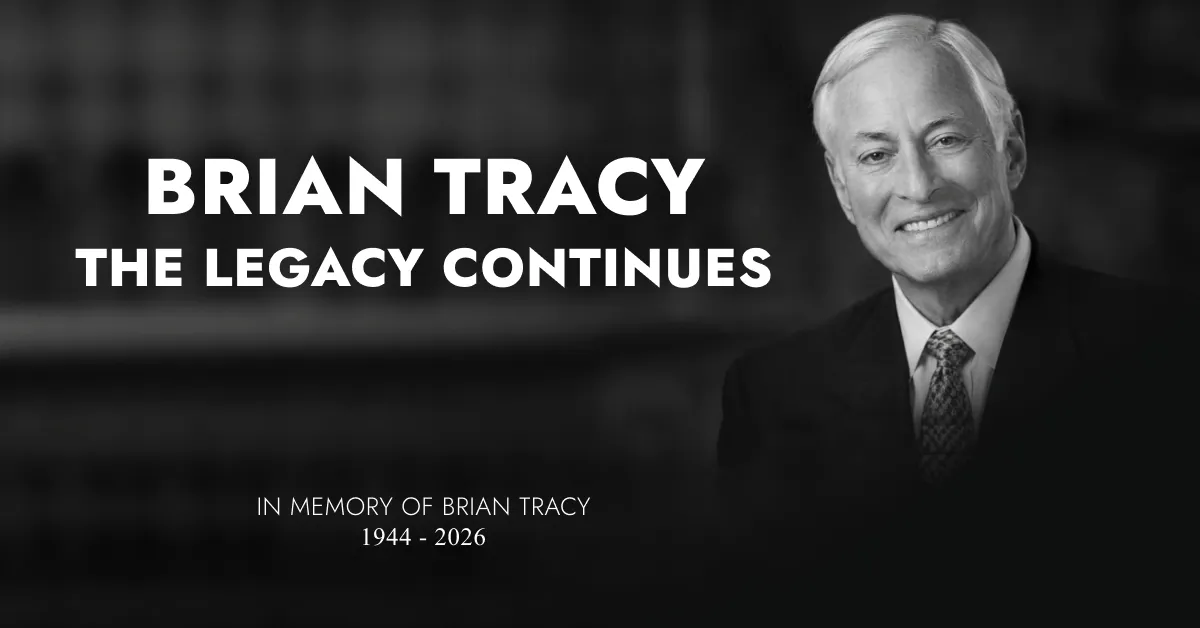
On November 12, 2026, Brian Tracy passed away at the age of 82. The world said goodbye to one of its most influential experts in personal development, motivation and success—a renowned international speaker, business consultant and bestselling author whose ideas on self-discipline, productivity and setting clear goals reached millions of people.
When Brian Tracy published Eat That Frog! in 2001, he didn’t offer a revolutionary, complicated plan for rewriting your entire life overnight. Instead, he shared hard-won wisdom wrapped in concise pragmatism: if the worst thing you have to do today is eat a live frog, it’s best to do it first thing in the morning. And if you have to eat two frogs, eat the bigger one first.
Brian Tracy’s life story reads like a remarkable novel: a boy who lived in his car and survived on odd jobs became a self-made millionaire through his intelligence, determination and self-discipline.
Born in Canada to a family struggling to make ends meet, he left school early and began working wherever he could find a job, often doing hard physical labour. He washed dishes and cars, mopped floors in a nursing home, and worked for logging and construction companies and in factories. At first, he was fired from every job—only to find another one and be fired again. Eventually, he found his place in door-to-door sales.
Even though he worked 12-hour days, there were weeks when he failed to sell a single thing. Tracy remembered his first sale for the rest of his life. At 9:30 one evening, after another exhausting and unproductive day, he hesitated before knocking on one more door, almost ready to give up. He knocked—and discovered that the family who answered had been thinking of buying exactly the product he was selling.
That experience gave rise to his sales motto: “One more call at the store next door”—a principle Tracy followed throughout his life. He sold during the day, then spent his evenings reading books about sales and teaching himself. His education came not from a university, but from real life.
That is why, in time, he shared with the millions of people who attended his seminars the hard-won knowledge he had gained through personal experience, mistakes and failures—lessons that ultimately taught him how to succeed not only in his career, but in life.
Over the course of a career spanning decades, he wrote more than 80 books, advised over 1,000 companies and spoke to more than 5 million people through 5,000 talks and seminars in the United States, Canada and 82 other countries.
What set Tracy apart from the sea of modern “quick success” gurus was his calm, measured manner, in which people saw the reassuring presence of a supportive father or older brother. He was a professor of personal success literature who truly believed that ordinary people could achieve extraordinary things simply by mastering the power of small, daily steps.
At 15, Tracy began a lifelong search for answers to two questions: “Why are some people more successful than others? What is the most important prerequisite for success?”
He brought the key elements of success together in what he called the “Golden Triangle”: taking 100% responsibility for who you are and what you have achieved, for the rest of your life, without shifting that responsibility to anyone else; setting clear goals and making plans; and practising self-discipline.
Tracy defined self-discipline as the ability to do what needs to be done, when it needs to be done, whether you feel like doing it or not.
Every great undertaking, Tracy said, begins with an act of faith—a journey into the darkness of the unknown. If we knew in advance about every difficulty, obstacle, problem and failure ahead of us, many of us would never start anything at all. In many ways, this journey is a metaphor for life itself, he emphasised.
“My life and everything I’ve achieved are shaped by what I learned early on. Whenever you try to do something out of the ordinary, people will line up to tell you it can’t be done, explain why it won’t work, and warn that you’ll waste your money and your time. Even people who should be supporting you may try to discourage you. You have to learn to rise above them, ignore them and keep working towards your goal.”
In Goals!, he argues that a clear vision is the most important prerequisite for success—that writing down your goals turns vague wishes into tangible roadmaps for achieving them. In No Excuses!, he champions self-discipline not as punishment, but as the highest form of self-respect.
In a moving tribute following his death, his grandson Will Stein recalled a conversation they had the night before Tracy passed away. They spoke about ambition and how a person can leave a mark on the world through the way they live. To the very end, Tracy lived by his own philosophy: committed to setting goals and leaving a lasting legacy.
But this legacy is not measured by book sales or translations into dozens of languages. It lives in the quiet moments of everyday life: in the novice freelancer who finally opens a blank document and faces the blinking cursor, putting their first goal or aspiration into words instead of scrolling through social media; in the student who writes a five-year plan for their life instead of simply hoping for the best; in anyone who has ever faced a difficult obstacle, taken a deep breath and decided to eat the frog.
Tracy also left behind a worthy successor to his wisdom and knowledge: his son, Michael Tracy. Like his father, Michael teaches people how to succeed and inspires them to take control of their own destinies. He translates his father’s principles for today’s entrepreneurs, technology companies and new generation of managers.
Michael brings extensive hands-on experience in building and growing business systems. His training therefore focuses on practical processes, strategic planning and team building.
Brian Tracy taught us that success isn’t a miraculous bolt of lightning. It’s the result of small, deliberate, disciplined choices, repeated day after day. The frogs will still be waiting for us tomorrow morning—but thanks to Brian, we now know exactly what to do with them.